Respect, from both religious and cultural perspectives, holds profound significance, often serving as a foundational value that binds societies and spiritual communities together. However, its interpretation and application can vary significantly depending on the context, leading to both shared ideals and potential points of tension.
Religious Perspective
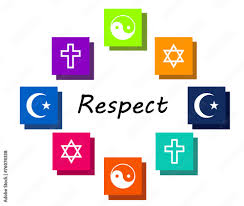
Many of the world’s major religions emphasize respect as a virtue integral to ethical living. For example, in Christianity, respect is often framed as love and kindness toward others, with Jesus’ commandment to “love thy neighbour as thyself” serving as a guiding principle. Similarly, in Islam, respect is encapsulated in the concept of adab—proper etiquette and respectful conduct—especially toward elders, family, and authority. The Quran and Hadith highlight that respect for others is an act of piety and a way to demonstrate reverence for God’s creation.
In Buddhism, respect is expressed through mindfulness and compassion, where individuals are encouraged to cultivate deep reverence for all living beings, which reflects the interconnectedness of life. Hinduism emphasizes ahimsa (non-violence) as a form of respect, where harm to others—whether physical, emotional, or mental—is seen as a violation of sacred duty.
Despite these common threads, different religious traditions sometimes highlight specific groups for special respect. For example, many religious systems prioritize respect for elders, parents, and teachers, viewing them as holders of wisdom or as direct conduits to divine teachings. However, this focus can sometimes translate into rigid hierarchical structures, where respect must be given to authority figures regardless of their behaviour or actions, creating tensions when the respect owed to individuals conflicts with principles of justice or ethical behaviour.
Cultural Perspective
Respect in various cultures also serves as a social adhesive, guiding behaviour and relationships within families, communities, and even nations. In many Asian cultures, such as Japan and Korea, respect is deeply ingrained in the social fabric, with rituals of deference playing a key role in interpersonal communication. The use of honorifics, bowing, or the practice of addressing elders with high levels of formality signifies respect and reinforces social harmony.
However, in Western societies, particularly in more individualistic cultures like the United States or parts of Europe, respect tends to emphasize equality, personal autonomy, and mutual recognition. Here, respect is more likely to be viewed as a right inherent to all individuals, irrespective of age, social status, or position. This often manifests in more egalitarian norms where the emphasis is on treating others with dignity and fairness, regardless of their hierarchical position.
One critical thought, however, is that the cultural approach to respect can be deeply influenced by power dynamics and historical contexts. In many societies, what is considered “respectful” behaviour can be reflective of underlying social hierarchies or historical inequalities. For example, practices of respecting authority or elders may also perpetuate social structures that limit the agency or autonomy of marginalized groups, such as women, youth, or lower-caste individuals. This creates a tension between respect as a social ideal and the potential for respect to become a tool of oppression or control.
Conclusion
Respect, viewed through both religious and cultural lenses, is essential to fostering harmonious relationships and ethical living. However, it must also be critically examined, especially when rigid interpretations of respect can reinforce social inequalities or inhibit justice. True respect, therefore, should be dynamic—acknowledging the inherent dignity of every person while promoting fairness, accountability, and the dismantling of harmful hierarchical structures that can undermine human flourishing.
And you, what do you think about respect?
 Good Values
Leave a comment